by Jim Currie
A defining skill of top performing sales reps is the ability to gain access to and effectively communicate with the decision makers in the C-Suite. A new e-book Best Practices for C-Suite Selling, published by Boardroom Insiders, is a great primer for all aspiring top performers and sales leaders. At 12 pages or so, it can be read on a lunch break even by the busiest of reps.
The steps to success
One of the critical elements of success in sales that often gets overlooked is preparing for our audience: the buyer or strategic influencer. To successfully sell a product or service requires knowing why the prospect would care, what her risk worries might be, and what your product or service’s value proposition is in terms of her pressing business concerns.
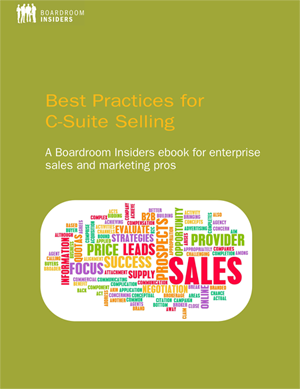
Oftentimes salespeople spend hours painstakingly crafting the “perfect” PowerPoint presentation in an exercise that tends to describe the product and services we offer rather than focus on the needs and pain points of the prospect. Best Practices highlights and reminds us of steps that we can take to prepare appropriately for our audience in terms of what’s going on in the industry, within the company we are selling into, and lastly to the individual CXO we are pitching.
Focus on the customer
Having managed sales teams and sold for 20+ years, the importance of making sure our focus is on customer needs cannot be overstated. Enjoy the e-book and happy selling!
posted by Shyamali Ghosh on June 24, 2014
by Matt Manning
New products come and go. The very best thrive for decades. Every once in a blue moon comes an idea so perfectly timed and executed that it could literally last forever. LinkedIn is one of those products—a cocktail napkin of an idea that changed the world of business overnight.
It is, therefore, with regret that I see the signs that this product/company that could have been “for the ages” is leaving an array of once-in-a-lifetime opportunities unfulfilled.
First of all, they are overpricing their subscription service and under-featuring it. This is mercifully a simple thing to fix if they want to. Let’s call this a $25 million blown opportunity (500K subs at $50/year). It’s a relative drop in the bucket compared to the opportunities LinkedIn is blowing in the “directory” space, however.
I know a fair amount about this market segment from launching hoovers.com, corptech.com, and industry-specific directories, and estimate that there is a $6 billion+ opportunity they’re squandering here.
Specifically:
- A D&B/Equifax/Experian Killer. Comprehensive company data with virtually all current and former personnel, revenues and headcount (albeit self-reported), and products. Let’s call this a $5 billion mistake.
- Competitive Intelligence on Steroids. A view into the complex network of corporate “kieretsus”–company relationships with key suppliers, partners, and customers. There is nothing like this on the market so it’s hard to value, but clearly it’s a game-changer.
- Industry-Specific Directories. This is a $500 million market segment that could be “turned on” overnight and would rock the B2B publishing work to its foundation.
- List Sales. By confining list sales to a handful of seven-figure deals, LinkedIn sidesteps the opportunity to replace a large chunk of the direct marketing business. Let’s call that another $500 million left on the table.
The point of this rant/analysis is that everybody in the path of the potential tsunami of a LinkedIn that wakes up to these opportunities needs to be aggressively building barriers to entry to protect themselves. My advice? Code like the wind, embed yourselves deep in your customers’ workflows, make sure your customers are getting every ounce of value out of your services, and avoid extinction!
posted by Shyamali Ghosh on June 16, 2014